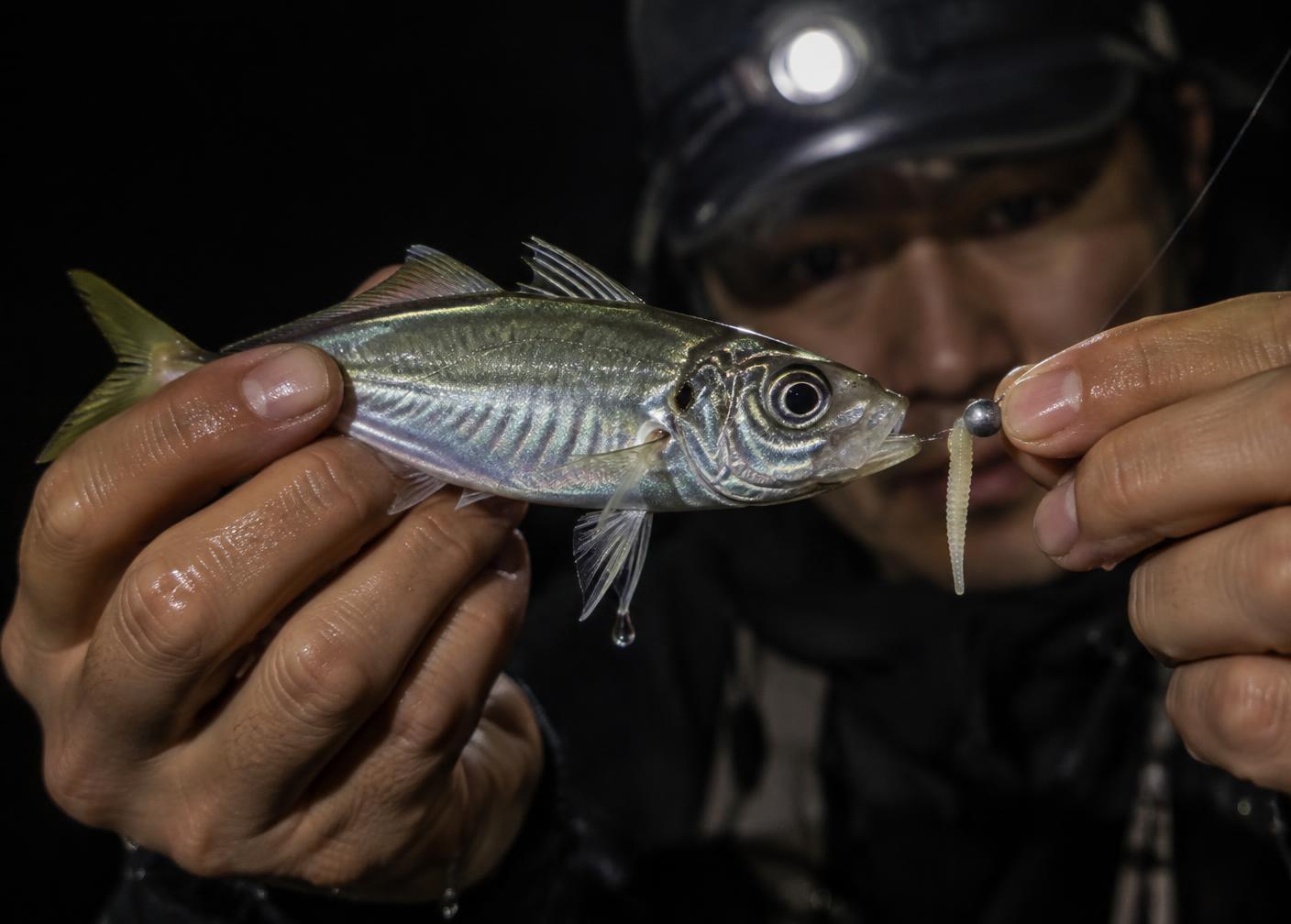
Two fish, two problems
Mebaru — rockfish of the Sebastes group — and aji, the horse mackerel, are both light-game targets, and they ask almost opposite things of a setup. Understanding that difference explains a great deal of Japanese tackle design.
What mebaru demand
Mebaru are associated with structure: rock, weed, harbour walls and cover. They tend to take positively and then attempt to return to that cover immediately. The critical moment is not detection but the second afterwards.
Tackle built around them therefore tends to have more backbone, a slightly longer blank for steering fish away from structure, and hooks and leaders with more margin for abrasion.
What aji demand
Aji feed in open or mid-water, often on very small prey, and frequently take without any decisive movement at all. Their mouth tissue is thin and tears easily under sustained pressure.
Tackle built around them goes the other way: extreme sensitivity to detect a take that produces no tap, and a soft cushioning section so the hook hold survives the strike and the fight. The solid tip exists largely because of this fish.
Why the distinction produces so much tackle
Once these two demands are recognised as incompatible, the proliferation of models stops looking like marketing. A rod cannot simultaneously be maximally soft at the tip for an undetectable bite and maximally authoritative for pulling a fish out of kelp.
Japanese ranges resolve this by building separate tools and naming them after the fishing rather than after a weight class. European tackle more often resolves it with a compromise and a broader rating.
What this means for European anglers
Much European light game is mixed-species by default: wrasse, bass, scad and mackerel from the same mark within an hour. That situation is structurally closer to the mebaru problem than the aji one, even where horse mackerel are the target.
Knowing which fish a rod was drawn around is therefore a more useful buying question than its stated casting weight. It tells you what the designer was protecting — sensitivity, or control.
Inn River is independent. It does not sell tackle, represent manufacturers or publish paid placements as editorial recommendations.