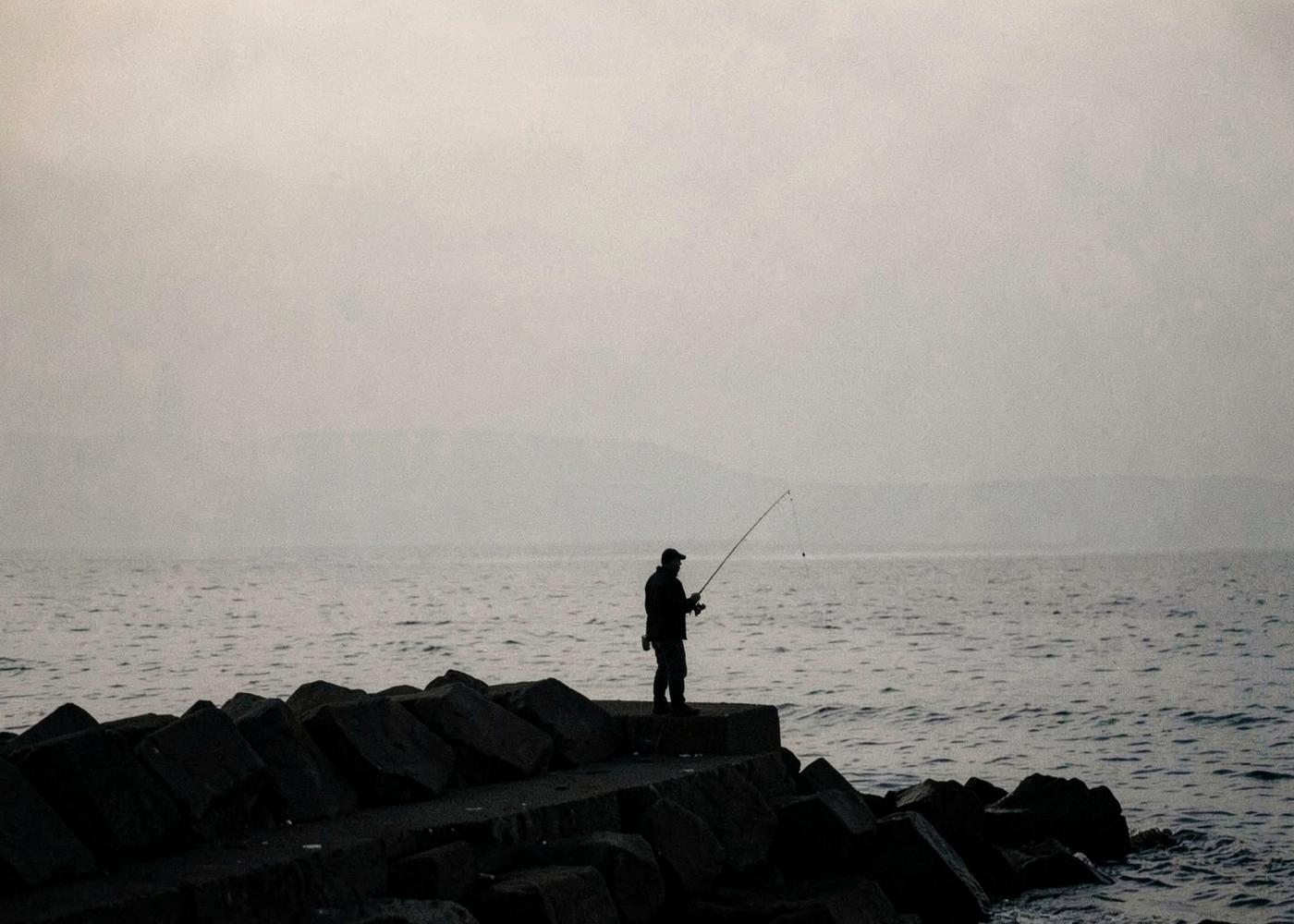
Observation before tackle
The strongest habit in Japanese light game, and the least equipment-dependent, is that the water is assessed before the box is opened. The tackle decision is an output of the reading, not the starting point.
This inverts the way many anglers approach a session. Arriving with a plan for a lure is common; arriving with a plan for what to look at is rarer and more useful.
What is being read
- Flow: direction, strength, and where it accelerates or stalls.
- Depth change: drop-offs, channel edges, the base of a wall.
- Light: where illumination ends and shadow begins.
- Structure: pontoons, moorings, rock, weed, anything that creates an edge.
- Surface: dimples, nervous water, slicks, wind lanes.
- Bait: size, density and how high in the water it is sitting.
Edges are the vocabulary
Almost everything in the list above describes an edge of some kind: between fast and slow water, deep and shallow, lit and dark, open and structured. Predatory fish organise themselves around edges because edges concentrate prey and reduce the work of ambush.
Once a session is framed as finding and fishing edges, apparently featureless water usually turns out to have several.
Reading with the line
Not all reading is visual. A light rig is an instrument: the angle of the line, the time of the fall and the point where the lure stops tell you about depth and flow you cannot see, particularly at night.
This is where technique and observation merge. Counting the lure down is a measurement; noticing that the same count now lands shallower is a reading of the tide.
Why it transfers
Species differ, seasons differ and tackle differs, but water behaves the same way everywhere. Of everything that can be taken from Japanese light game, this costs nothing and travels intact.
Inn River is independent. It does not sell tackle, represent manufacturers or publish paid placements as editorial recommendations.